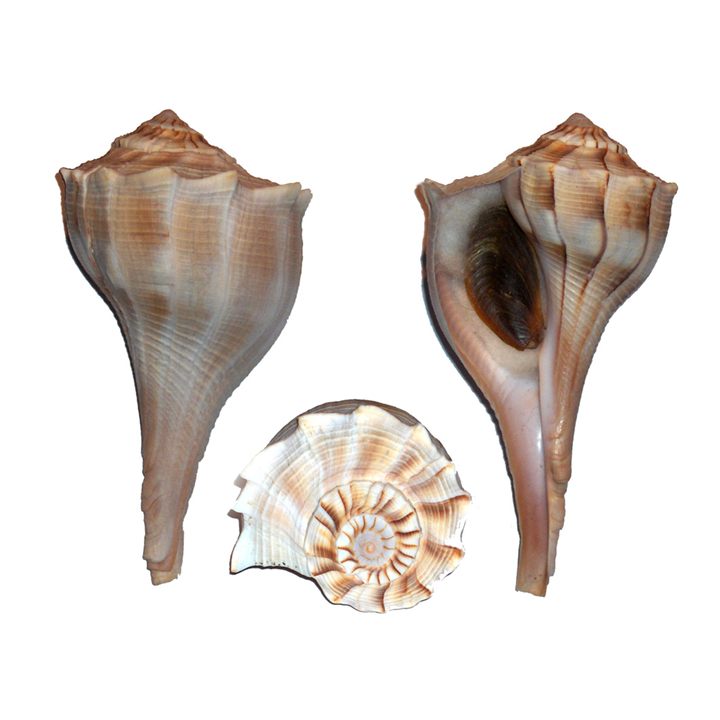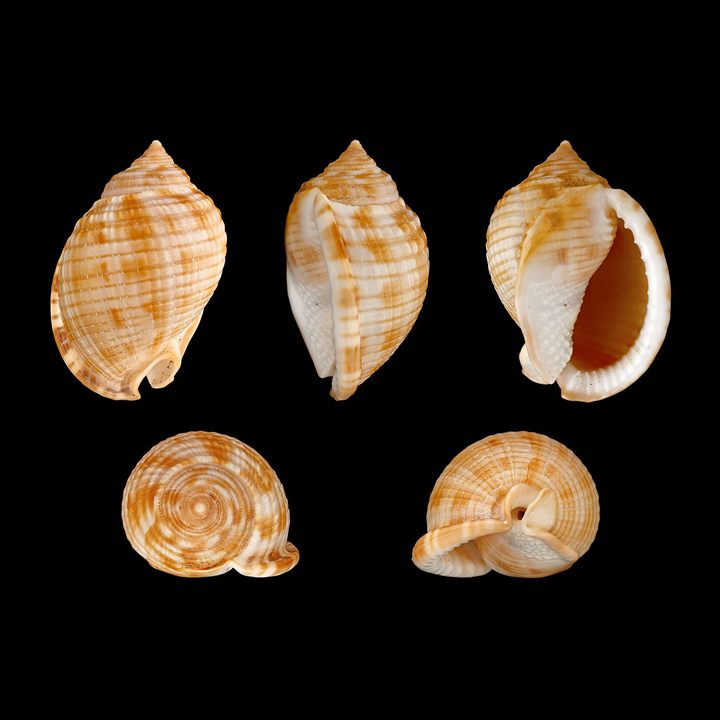
Photo: H. Zell, CC BY-SA 3.0, via Wikimedia Commons
Scotch Bonnet
- Typical size
- 2.0 – 4.0 in (5 – 10 cm)
- Group
- Gastropod (sea snail)
- Rarity
- Rare Trophy
- Habitat
- Offshore sandy bottoms feeding on sea urchins and sand dollars
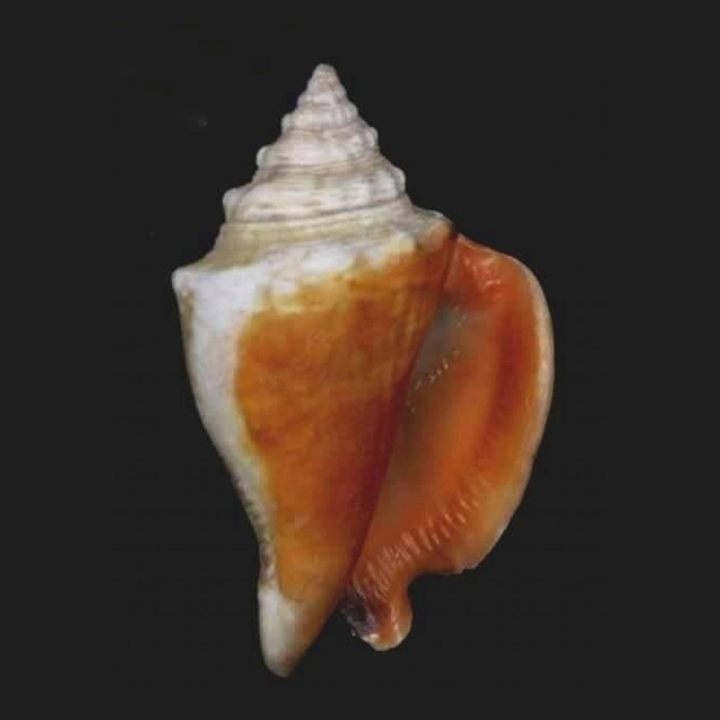
The state shell of North Carolina. Resembles a traditional Scottish bonnet cap with a rounded helmet shape, thick outer lip with fine teeth, and checkered amber-gold squarish patches.
Quick answer · Quick Identification Verdict
The Scotch Bonnet (Semicassis granulata) is a rounded, dome-shaped helmet snail admired for its delicate cancellate spiral grooves and checkered bands of amber, honey, and yellow-brown rectangular spots. Named for its resemblance to a traditional Scottish bonnet cap and celebrated as North Carolina's official state shell, it is an offshore echinoderm predator whose shells wash onto barrier island beaches following powerful storms.
Scotch Bonnet key facts
| Scientific name | Semicassis granulata (Cassidae (Helmet and bonnet snails)) |
|---|---|
| Typical size | 2.0 – 4.0 in (5 – 10 cm) |
| Rarity | Rare Trophy |
| Where it lives | Offshore sandy bottoms feeding on sea urchins and sand dollars |
| Best chance to find one | Outer Banks (Cape Hatteras, Ocracoke) and Portsmouth Island after nor'easters. |
| Opening | Right-opening (Dextral) |
| OK to collect? | Only if it is empty. If an animal is inside, return it to the water. Live shelling is banned in Lee County, Florida (Sanibel, Captiva, Fort Myers Beach). |
How to identify a Scotch Bonnet: Diagnostic Field Checklist
Confirm your find against these primary diagnostic characteristics:
- Subglobose, inflated helmet shape with a moderately low spire
- Checkered spiral bands of amber, golden-yellow, and orange-brown square spots
- Surface sculptured with grooved spiral cords and fine axial growth threads (cancellate texture)
- Heavily thickened, recurved outer lip lined with fine tooth-like denticulations on its inner margin
- Broad, glossy columellar shield (parietal callus) with small pustules near the base
Key Diagnostic Anatomy
Tap to collapse / expand
Examine these anatomical features to distinguish this specimen with certainty:
- Shape & Profile: Compact, globose (spherical) body whorl crowned by a short, conical spire. The shell has a stout, inflated architecture engineered to withstand deep-water currents.
- Aperture & Lip: Broadly ovate aperture terminating in a deeply notched, short siphonal canal that curves backward. The outer lip is dramatically thickened and folded back, creating a rigid protective rim.
- Outer Lip Denticulations: The inner margin of the thickened lip features 15 to 20 fine transverse ridges or 'teeth' that help shield the snail's soft body from predatory crabs.
- Columellar Shield: A wide, glass-like enamel shield spreads over the body whorl next to the inner lip, often textured with faint granules or wrinkles near the base.
- Coloration & Markings: Five to six spiral rows of square to rectangular yellowish-brown spots encircle the body whorl over a creamy-white or ivory background.
Identifying Worn, Weathered & Broken Finds
Surf-abraded Scotch Bonnets often lose their golden checkered spots, fading to a weathered chalky tan. To identify a wave-worn specimen: (1) check the inner margin of the outer lip—the strong transverse teeth (denticulations) remain visible even after extensive rolling in shell piles, (2) run your finger over the surface to feel the grooved spiral cords and beaded ridges, and (3) observe the globose helmet profile and curled siphonal notch.
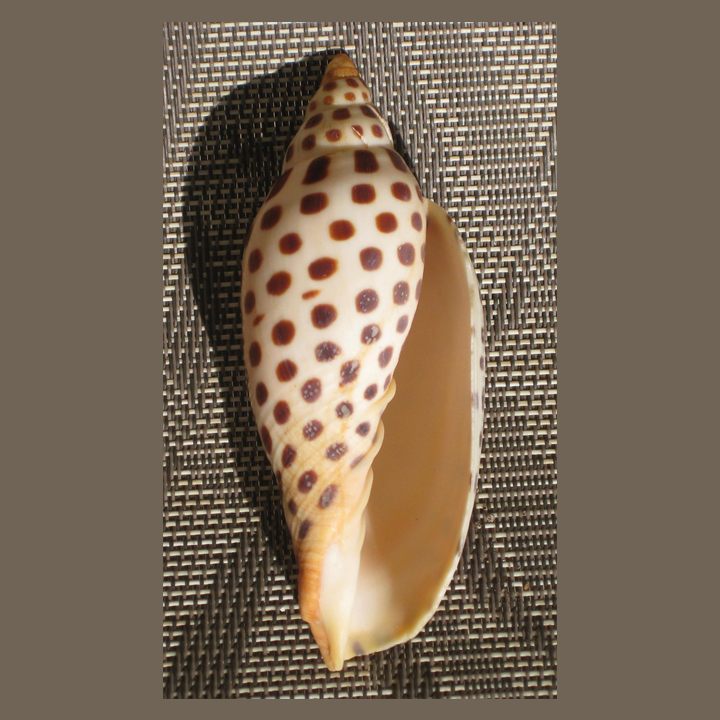
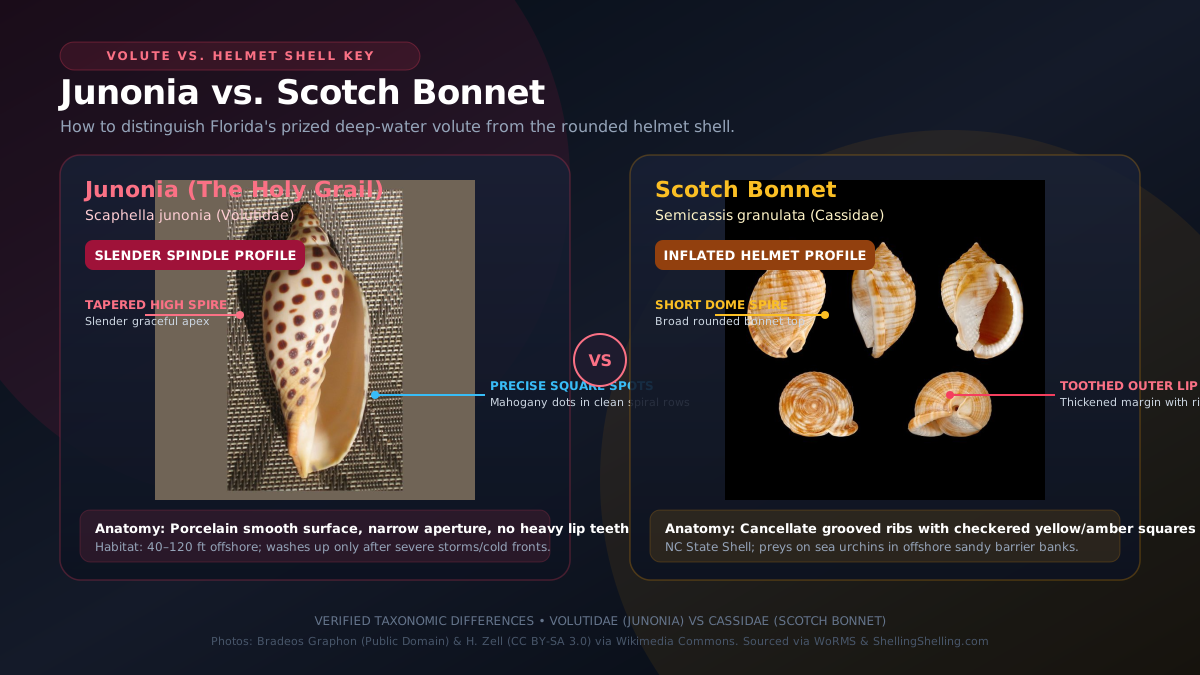
Diagnostic Visual Key: Scotch Bonnet Helmet vs. Junonia Volute
Spherical helmet shape with cancellate grooves and denticulated lip vs. slender smooth spindle.
Common Lookalikes & How to Tell Them Apart
Junonia
Slender, spindle-shaped volute with a high tapering spire, smooth porcelain finish, and square chocolate-mahogany spots.
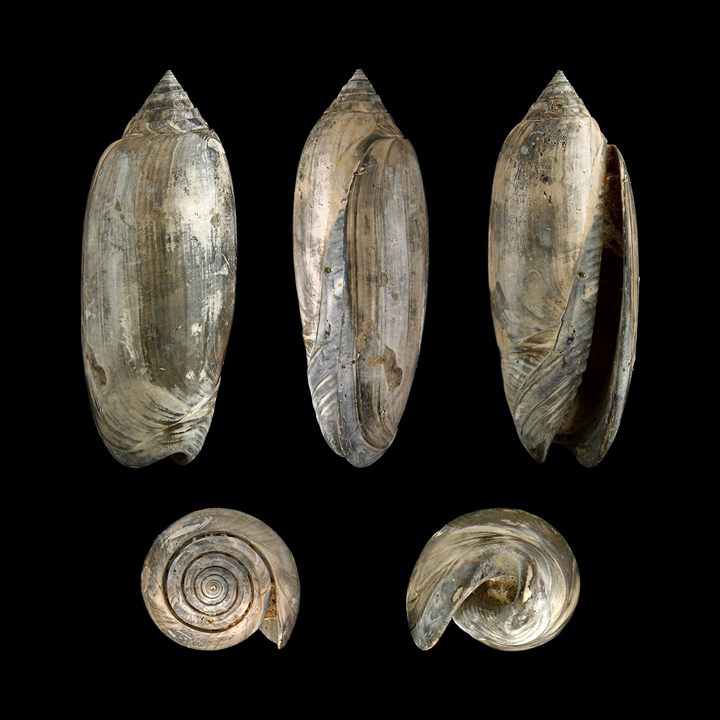
Shark Eye Moon Snail
Smooth, globe-shaped predatory snail with a very low spire, wide circular aperture, and blue-brown umbilical callus button.
Distribution, Depth & Regional Reality
Geographic Range: Western Atlantic from North Carolina to Florida, the Gulf of Mexico, the Caribbean Sea, and south to Brazil.
State Heritage: Adopted in 1965 as the official State Shell of North Carolina, the Scotch Bonnet was the very first state seashell designated in the United States, honoring the Scottish settlers who founded coastal communities along the Outer Banks.
Southwest Florida Reality: Scotch Bonnets live subtidally offshore at depths of 15 to 150 feet, where they feed primarily on sand dollars (Mellita tenuis) and sea urchins by drilling neat round holes through their tests. While more common on the high-energy Atlantic shores of Cape Hatteras and Portsmouth Island, they are prized finds on Southwest Florida barrier beaches after winter northwest gales and storm washouts, particularly at Bowman's Beach, Cayo Costa, and Blind Pass.
Realistic Search Timing: Uncommon on the Gulf Coast. Best targeted following strong winter cold front nor'westers with negative low tides that expose offshore shell troughs.
Recognizing Living Animals & Conservation Regulations
How to check if the shell is alive or occupied
Living bonnet snails possess a thin, semicircular, golden-brown horny operculum and a large cream-colored foot. If an operculum or active soft tissue is visible inside, the snail is alive.
Florida Wildlife Rules & Local Shelling Ordinances
Under Florida marine life protection rules and Lee County Ordinance 89-08, taking live Scotch Bonnets is strictly prohibited. If an animal or hermit crab is present, gently place it back into deeper water beyond the breaker line.
Scotch Bonnet: common questions
How do I identify a Scotch Bonnet?
The Scotch Bonnet (Semicassis granulata) is a rounded, dome-shaped helmet snail admired for its delicate cancellate spiral grooves and checkered bands of amber, honey, and yellow-brown rectangular spots. Named for its resemblance to a traditional Scottish bonnet cap and celebrated as North Carolina's official state shell, it is an offshore echinoderm predator whose shells wash onto barrier island beaches following powerful storms.
Where and when are you most likely to find a Scotch Bonnet?
Outer Banks (Cape Hatteras, Ocracoke) and Portsmouth Island after nor'easters.
What is the Scotch Bonnet most often confused with?
The Junonia. The Junonia is a slender spindle with a smooth, toothless lip; the Scotch Bonnet is a rounded, inflated helmet shell with grooved cords and a toothed outer lip.
Can I collect a Scotch Bonnet in Florida?
Only if it is empty. If an animal is inside, return it to the water. Live shelling is banned in Lee County, Florida (Sanibel, Captiva, Fort Myers Beach).
Scientific Review & Authoritative Sources
Tap to view citations & review criteria
Primary Authoritative References
- World Register of Marine Species (WoRMS): WoRMS taxon details for Semicassis granulata (Born, 1778), AphiaID 419747.
- North Carolina Department of Natural and Cultural Resources: State Symbols: The Scotch Bonnet (Semicassis granulata), adopted 1965.
- Bailey-Matthews National Shell Museum: Cassidae family guide: Semicassis granulata feeding ecology and shell features.