Seashell Lookalike Comparisons
Side-by-side diagnostic guides to commonly confused seashells: Lightning Whelk vs Knobbed Whelk, Junonia vs Scotch Bonnet, and key anatomical rules.
Why Beach Lookalikes Cause Confusion
Many marine shells share superficial similarities in color, size, or pattern that fool casual beachcombers. For example, tumbling surf often weathers away surface color, leaving only underlying structural architecture. Our field comparison keys focus on immutable biological characteristics—such as aperture handedness (chirality), outer lip dentition, and columellar plicae—that cannot be worn away by waves.
Select a side-by-side diagnostic guide below to verify your beach find with certainty:
Published Shell Comparison Guides
Every guide features correctly oriented real specimen photographs, anatomical diagrams, comparison tables, and worn specimen identification rules:
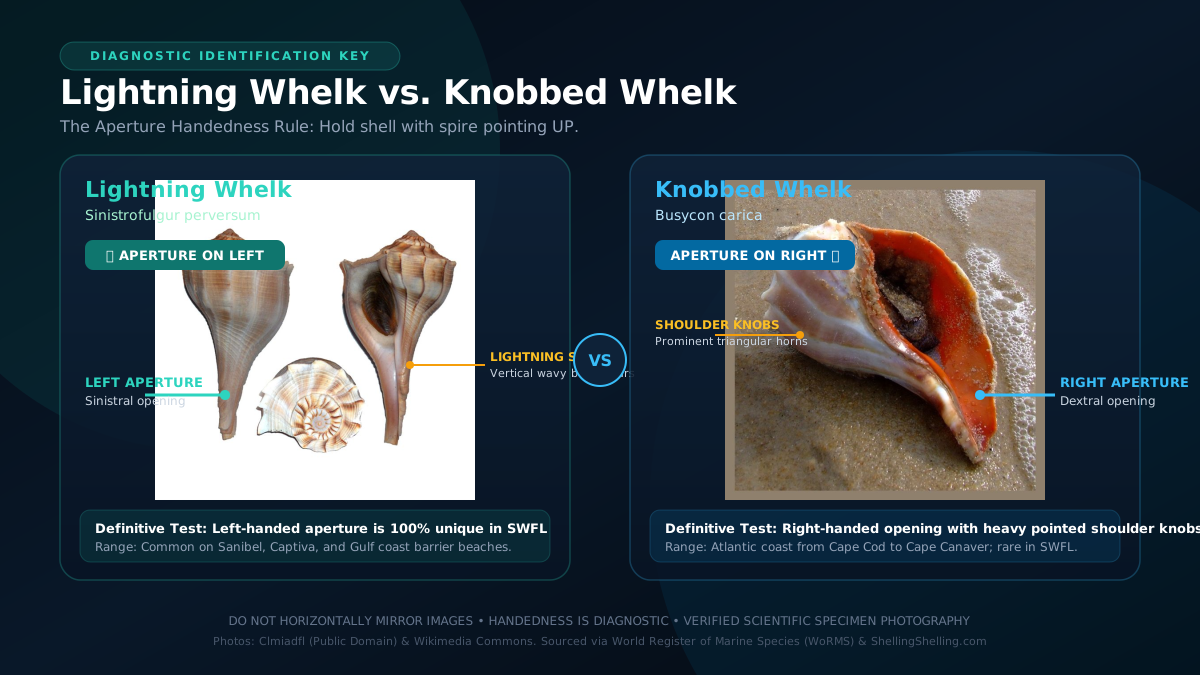
Lightning Whelk vs. Knobbed Whelk
Learn how to tell a Lightning Whelk from a Knobbed Whelk: Left-handed vs right-handed aperture orientation, shoulder thorns, and geographic ranges.
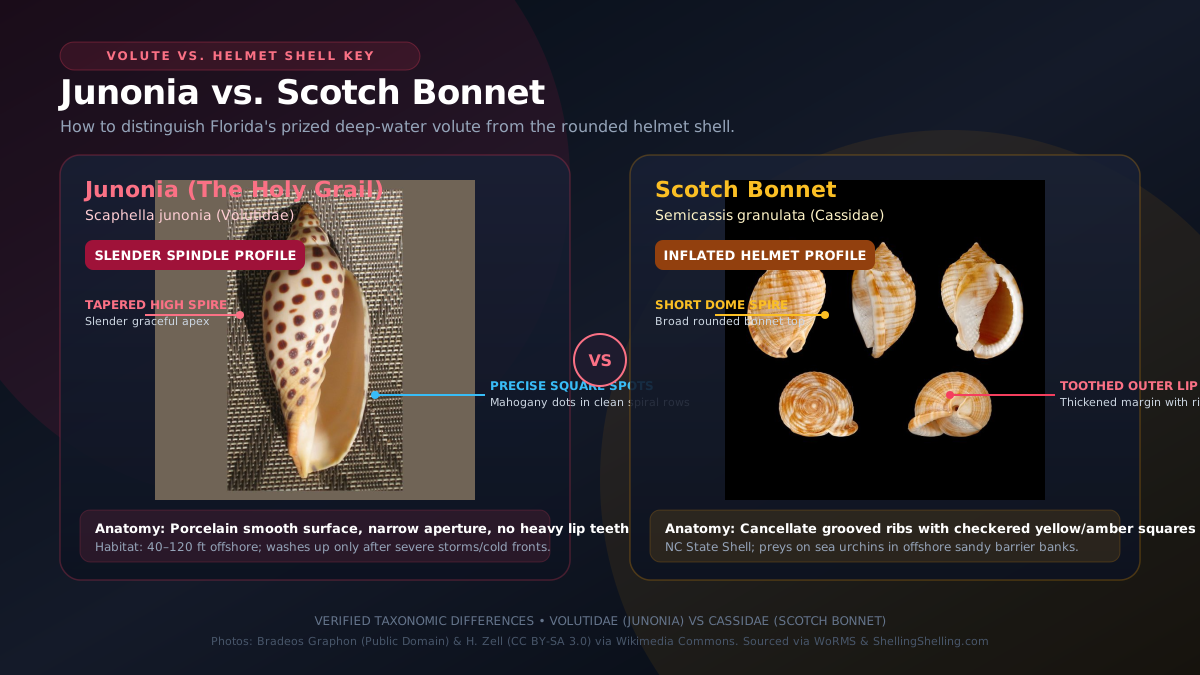
Junonia vs. Scotch Bonnet
How to tell a Junonia from a Scotch Bonnet: Spindle volute shape vs rounded helmet, neat spiral square spots vs checkered grid markings.
Interactive Lookalikes Lab
Looking for a quick interactive preview? Visit our homepage Lookalikes Lab to toggle through five classic beachcomber pairs, test your eye on aperture orientation, and compare diagnostic traits side by side.
Direct Species Field Guides & Research Queue
Comparing other lookalike species on the beach right now? Jump directly to the individual anatomical field guides for our most-requested pairs in the research queue, including Lion's Paw Scallop vs. Calico Scallop, Florida Fighting Conch vs. Florida Crown Conch, and True Tulip vs. Banded Tulip.