Photo: Veronidae, CC BY-SA 3.0, via Wikimedia Commons
Lion's Paw Scallop
- Typical size
- 3.5 – 6.0 in (9 – 15 cm)
- Group
- Bivalve (two-part shell)
- Rarity
- Holy Grail
- Habitat
- Deep offshore rocky ledges and coral reef crevices (40–150 ft)
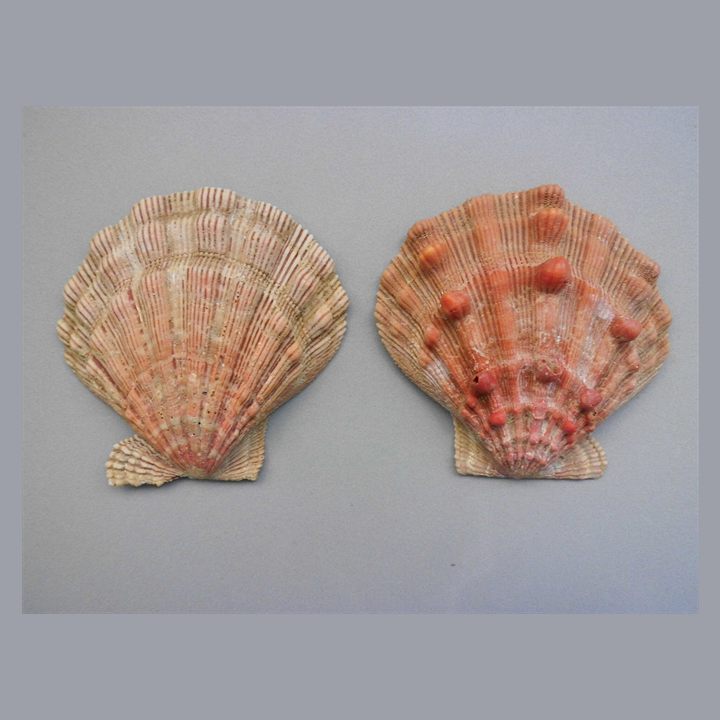
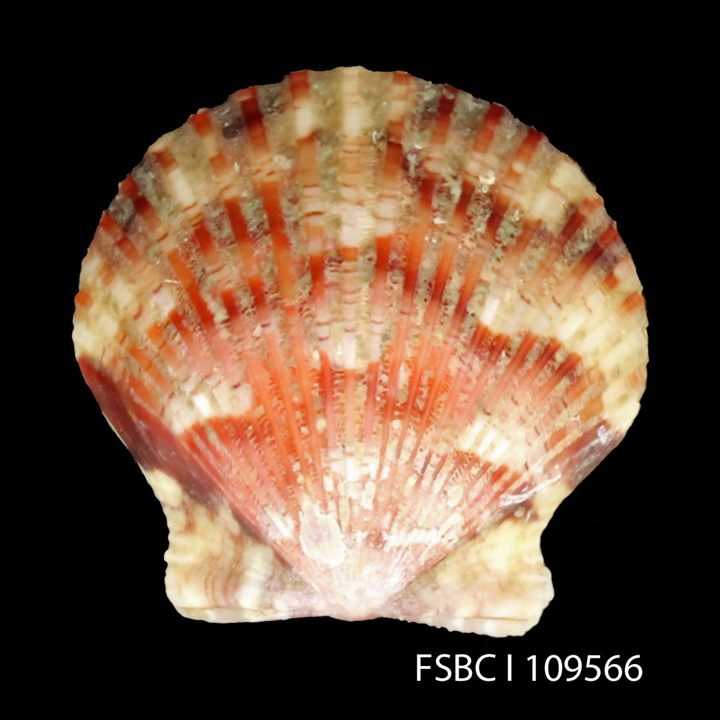
A colossal, heavy scallop shell revered by shell collectors worldwide. Features thick, sculpted radiating ribs punctuated by large raised rounded nodules resembling the knuckles of a lion's paw.
Quick answer · Quick Identification Verdict
Look for massive raised bulbous knobs (nodes) along roughly 8–10 heavy ribs, bathed in deep brick-red, burnt orange, or rich crimson colors.
Lion's Paw Scallop key facts
| Scientific name | Nodipecten nodosus |
|---|---|
| Typical size | 3.5 – 6.0 in (9 – 15 cm) |
| Rarity | Holy Grail |
| Where it lives | Deep offshore rocky ledges and coral reef crevices (40–150 ft) |
| Best chance to find one | Extremely rare in the surf; washes ashore after strong tropical depressions on southwest Florida beaches. |
| OK to collect? | Only if it is empty. If an animal is inside, return it to the water. Live shelling is banned in Lee County, Florida (Sanibel, Captiva, Fort Myers Beach). |
How to identify a Lion's Paw Scallop: Diagnostic Field Checklist
Confirm your find against these primary diagnostic characteristics:
- Heavy, thick, arched shell valves with deep crimson or terracotta hues
- Prominent raised bulbous knuckle nodes along 8–10 heavy ribs
- Asymmetrical wing ears flanking the hinge
Commonly confused with
The Lion's Paw Scallop is often mistaken for the Calico Scallop. Compare them side by side in the Lookalikes Lab.
Where and when to find it
Extremely rare in the surf; washes ashore after strong tropical depressions on southwest Florida beaches.
Shelling ethics: only collect empty shells. If an animal is inside, return it to the water. Live shelling is banned in Lee County, Florida (Sanibel, Captiva, Fort Myers Beach).
Lion's Paw Scallop: common questions
How do I identify a Lion's Paw Scallop?
Look for massive raised bulbous knobs (nodes) along roughly 8–10 heavy ribs, bathed in deep brick-red, burnt orange, or rich crimson colors.
Where and when are you most likely to find a Lion's Paw Scallop?
Extremely rare in the surf; washes ashore after strong tropical depressions on southwest Florida beaches.
What is the Lion's Paw Scallop most often confused with?
The Calico Scallop. Compare both guides side by side before deciding.
Can I collect a Lion's Paw Scallop in Florida?
Only if it is empty. If an animal is inside, return it to the water. Live shelling is banned in Lee County, Florida (Sanibel, Captiva, Fort Myers Beach).