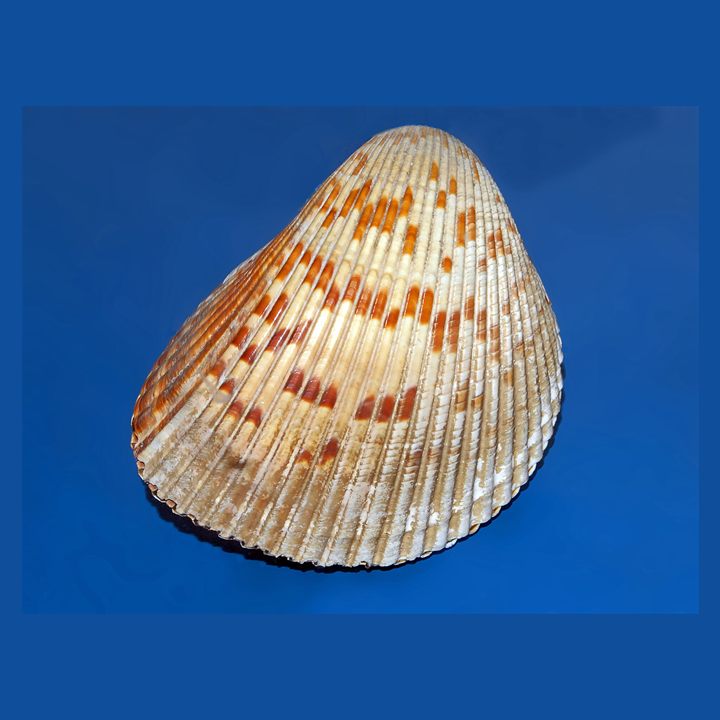
Photo: Hectonichus, CC BY-SA 3.0, via Wikimedia Commons
Atlantic Giant Cockle
- Typical size
- 3.0 – 5.0 in (7.5 – 13 cm)
- Group
- Bivalve (two-part shell)
- Rarity
- Common Find
- Habitat
- Sandy bottoms in shallow water from Virginia to the Gulf of Mexico
A big, heart-shaped clam covered in 32 – 36 strong radiating ribs. The outside is tan to mahogany-red toward the edges and the inside is often rosy pink or salmon.
Quick answer · Quick Identification Verdict
Look for a deep, inflated, heart-shaped valve with many evenly spaced radial ribs and a scalloped edge. Unlike scallops, it has no ear-like wings at the hinge.
Atlantic Giant Cockle key facts
| Scientific name | Dinocardium robustum |
|---|---|
| Typical size | 3.0 – 5.0 in (7.5 – 13 cm) |
| Rarity | Common Find |
| Where it lives | Sandy bottoms in shallow water from Virginia to the Gulf of Mexico |
| Best chance to find one | Very common on Gulf and Atlantic beaches after storms; large single valves are easy to spot on sandbars. |
| OK to collect? | Only if it is empty. If an animal is inside, return it to the water. Live shelling is banned in Lee County, Florida (Sanibel, Captiva, Fort Myers Beach). |
How to identify a Atlantic Giant Cockle: Diagnostic Field Checklist
Confirm your find against these primary diagnostic characteristics:
- Large, deep, heart-shaped valve
- 32 – 36 strong, evenly spaced radiating ribs
- No ear-like wings at the hinge; often pink inside
Where and when to find it
Very common on Gulf and Atlantic beaches after storms; large single valves are easy to spot on sandbars.
Shelling ethics: only collect empty shells. If an animal is inside, return it to the water. Live shelling is banned in Lee County, Florida (Sanibel, Captiva, Fort Myers Beach).
Atlantic Giant Cockle: common questions
How do I identify a Atlantic Giant Cockle?
Look for a deep, inflated, heart-shaped valve with many evenly spaced radial ribs and a scalloped edge. Unlike scallops, it has no ear-like wings at the hinge.
Where and when are you most likely to find a Atlantic Giant Cockle?
Very common on Gulf and Atlantic beaches after storms; large single valves are easy to spot on sandbars.
Can I collect a Atlantic Giant Cockle in Florida?
Only if it is empty. If an animal is inside, return it to the water. Live shelling is banned in Lee County, Florida (Sanibel, Captiva, Fort Myers Beach).