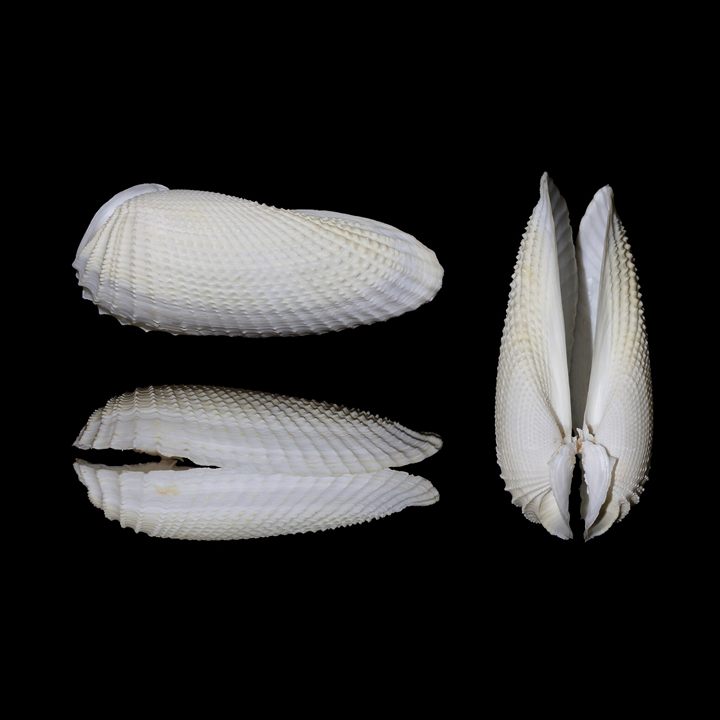
Photo: MerlinCharon, CC0, via Wikimedia Commons
Angel Wing
- Typical size
- 4.0 – 7.0 in (10 – 18 cm)
- Group
- Bivalve (two-part shell)
- Rarity
- Prized Find
- Habitat
- Burrows up to 3 feet deep in coastal mudflats and muddy sand
One of the most graceful bivalves in the ocean. Elongated, pure snowy-white valves with delicate radiating raspy ribs that curl outward, remarkably resembling the feathered wings of an angel.
Quick answer · Quick Identification Verdict
Extremely brittle porcelain white shell. Finding both valves intact together is an extraordinary beachcomber triumph.
Angel Wing key facts
| Scientific name | Cyrtopleura costata |
|---|---|
| Typical size | 4.0 – 7.0 in (10 – 18 cm) |
| Rarity | Prized Find |
| Where it lives | Burrows up to 3 feet deep in coastal mudflats and muddy sand |
| Best chance to find one | Sheltered bays and tidal mudflats during extreme negative low spring tides. |
| OK to collect? | Only if it is empty. If an animal is inside, return it to the water. Live shelling is banned in Lee County, Florida (Sanibel, Captiva, Fort Myers Beach). |
How to identify a Angel Wing: Diagnostic Field Checklist
Confirm your find against these primary diagnostic characteristics:
- Translucent pure snowy white elongated valves
- Approximately 30 radiating ribs with raspy, beaded prickly scales
- Graceful outward flare resembling feathered angelic wings
Where and when to find it
Sheltered bays and tidal mudflats during extreme negative low spring tides.
Shelling ethics: only collect empty shells. If an animal is inside, return it to the water. Live shelling is banned in Lee County, Florida (Sanibel, Captiva, Fort Myers Beach).
Angel Wing: common questions
How do I identify a Angel Wing?
Extremely brittle porcelain white shell. Finding both valves intact together is an extraordinary beachcomber triumph.
Where and when are you most likely to find a Angel Wing?
Sheltered bays and tidal mudflats during extreme negative low spring tides.
Can I collect a Angel Wing in Florida?
Only if it is empty. If an animal is inside, return it to the water. Live shelling is banned in Lee County, Florida (Sanibel, Captiva, Fort Myers Beach).