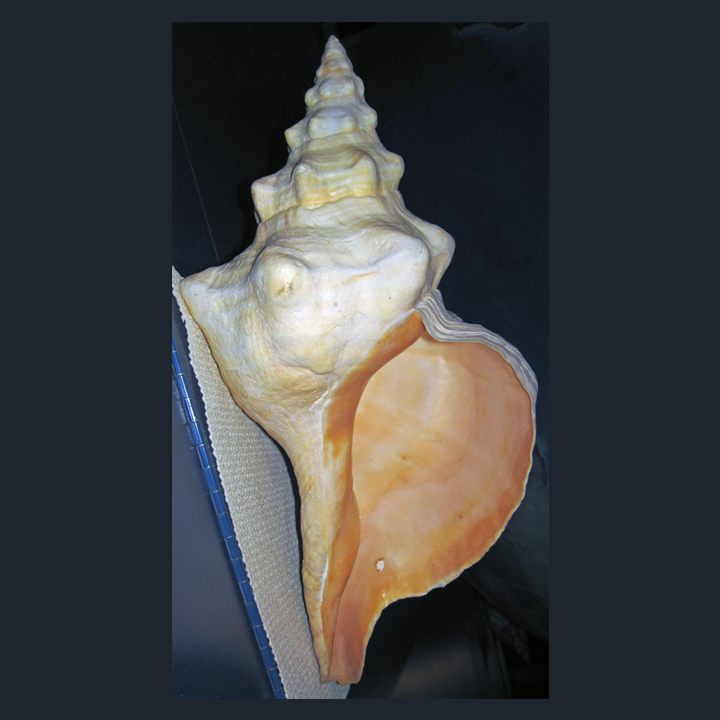
Photo: James St. John, CC BY 2.0, via Wikimedia Commons
Florida Horse Conch
- Typical size
- Up to 24 in (60 cm); beach finds usually 3 – 12 in
- Group
- Gastropod (sea snail)
- Rarity
- Prized Find
- Habitat
- Seagrass beds and sand or mud flats in warm shallow water from North Carolina to the Gulf of Mexico
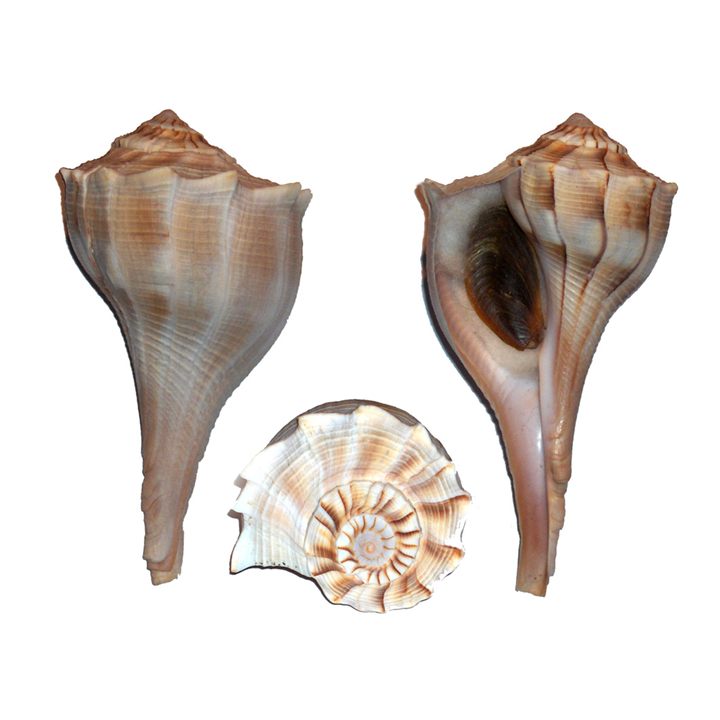
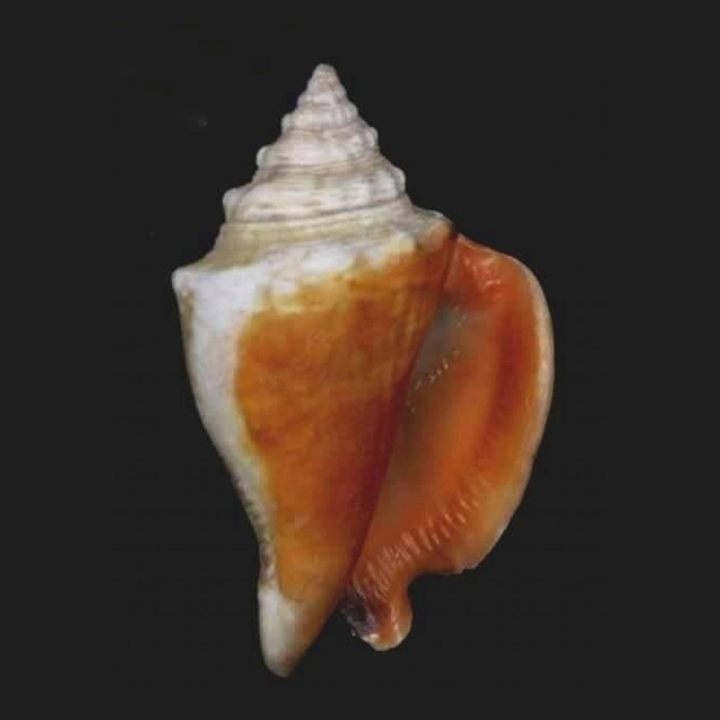
Florida's state shell and one of the largest snails in North America. Adults have a long spindle shape with knobby shoulders under a grey-brown outer skin (periostracum); young shells and the interior are bright orange.
Quick answer · Quick Identification Verdict
Look for a tall spindle shape with rounded knobs on each whorl, raised spiral cords, and a long siphonal canal. Juveniles are vivid orange. Tulips are smaller and smoother, without knobs.
Florida Horse Conch key facts
| Scientific name | Triplofusus giganteus |
|---|---|
| Typical size | Up to 24 in (60 cm); beach finds usually 3 – 12 in |
| Rarity | Prized Find |
| Where it lives | Seagrass beds and sand or mud flats in warm shallow water from North Carolina to the Gulf of Mexico |
| Best chance to find one | Juveniles turn up in the wrack line and on sandbars in southwest Florida after storms; big adults rarely wash up. Leave any live horse conch in the water. |
| OK to collect? | Only if it is empty. If an animal is inside, return it to the water. Live shelling is banned in Lee County, Florida (Sanibel, Captiva, Fort Myers Beach). |
How to identify a Florida Horse Conch: Diagnostic Field Checklist
Confirm your find against these primary diagnostic characteristics:
- Large spindle shape with a tall spire and long siphonal canal
- Rounded knobs on the shoulder of each whorl plus spiral cords
- Orange shell (juveniles) or orange interior under grey-brown skin (adults)
Commonly confused with
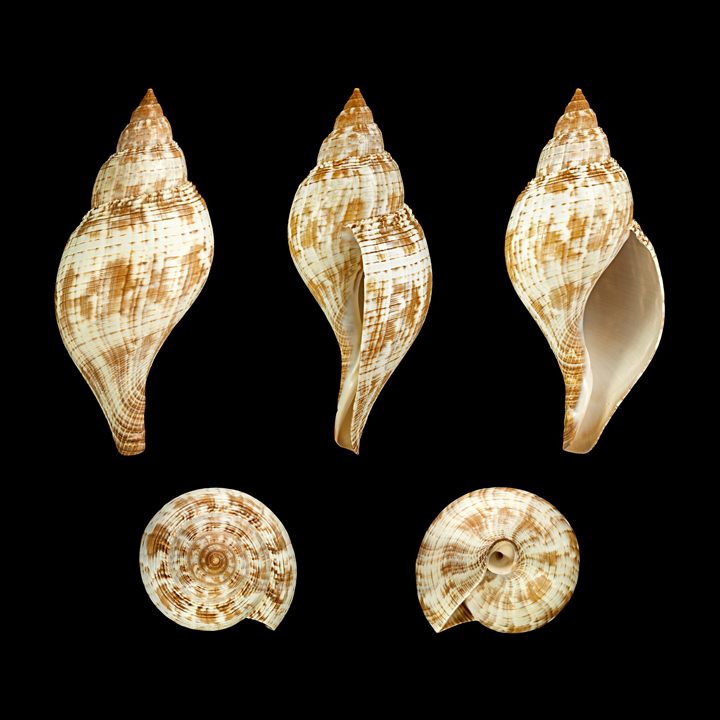
The Florida Horse Conch is often mistaken for the True Tulip. Compare them side by side in the Lookalikes Lab.
Where and when to find it
Juveniles turn up in the wrack line and on sandbars in southwest Florida after storms; big adults rarely wash up. Leave any live horse conch in the water.
Shelling ethics: only collect empty shells. If an animal is inside, return it to the water. Live shelling is banned in Lee County, Florida (Sanibel, Captiva, Fort Myers Beach).
Florida Horse Conch: common questions
How do I identify a Florida Horse Conch?
Look for a tall spindle shape with rounded knobs on each whorl, raised spiral cords, and a long siphonal canal. Juveniles are vivid orange. Tulips are smaller and smoother, without knobs.
Where and when are you most likely to find a Florida Horse Conch?
Juveniles turn up in the wrack line and on sandbars in southwest Florida after storms; big adults rarely wash up. Leave any live horse conch in the water.
What is the Florida Horse Conch most often confused with?
The True Tulip. Compare both guides side by side before deciding.
Can I collect a Florida Horse Conch in Florida?
Only if it is empty. If an animal is inside, return it to the water. Live shelling is banned in Lee County, Florida (Sanibel, Captiva, Fort Myers Beach).