Photo: Mário NET, CC BY-SA 4.0, via Wikimedia Commons
Florida Crown Conch
- Typical size
- 2.0 – 5.0 in (5 – 12 cm)
- Group
- Gastropod (sea snail)
- Rarity
- Common Find
- Habitat
- Brackish estuaries, oyster bars and mangrove mud flats in Florida and the eastern Gulf
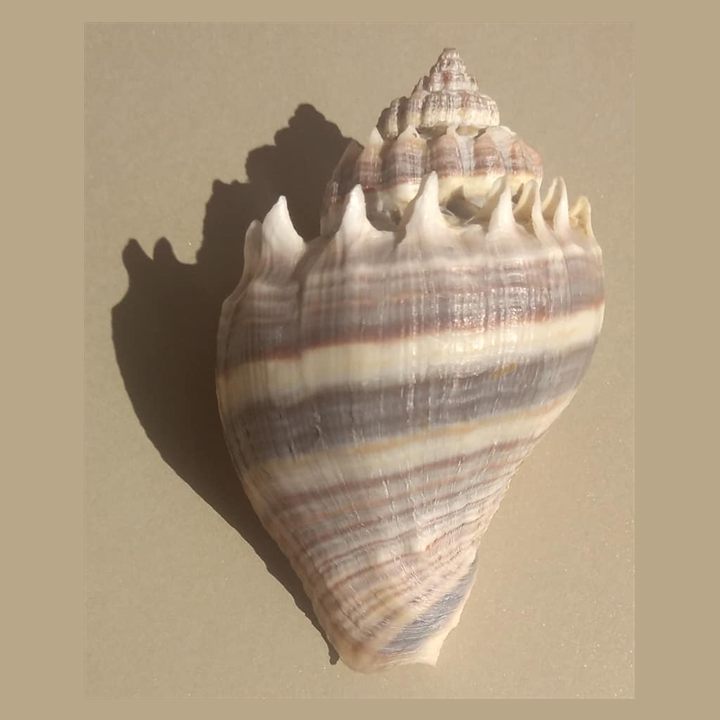
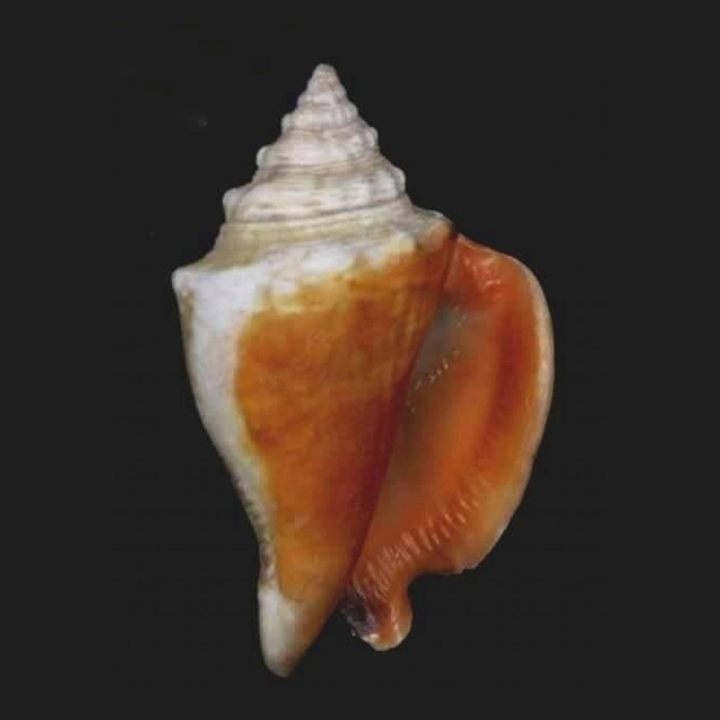
A stout, highly variable snail named for the ring of curved spines around its shoulder that looks like a crown. It is usually banded in brown, purple-grey and cream.
Quick answer · Quick Identification Verdict
Look for one or more rows of sharp, curved spines on the shoulder, often with a second row near the base. The aperture is wide and pale, without the glossy orange of a Fighting Conch.
Florida Crown Conch key facts
| Scientific name | Melongena corona |
|---|---|
| Typical size | 2.0 – 5.0 in (5 – 12 cm) |
| Rarity | Common Find |
| Where it lives | Brackish estuaries, oyster bars and mangrove mud flats in Florida and the eastern Gulf |
| Best chance to find one | Search bay-side beaches, mangrove edges and oyster bars at low tide rather than open Gulf beaches. |
| OK to collect? | Only if it is empty. If an animal is inside, return it to the water. Live shelling is banned in Lee County, Florida (Sanibel, Captiva, Fort Myers Beach). |
How to identify a Florida Crown Conch: Diagnostic Field Checklist
Confirm your find against these primary diagnostic characteristics:
- Crown of sharp, curved spines around the shoulder
- Alternating brown, grey-purple and cream spiral bands
- Wide, pale aperture without an orange glaze
Commonly confused with
The Florida Crown Conch is often mistaken for the Florida Fighting Conch. Compare them side by side in the Lookalikes Lab.
Where and when to find it
Search bay-side beaches, mangrove edges and oyster bars at low tide rather than open Gulf beaches.
Shelling ethics: only collect empty shells. If an animal is inside, return it to the water. Live shelling is banned in Lee County, Florida (Sanibel, Captiva, Fort Myers Beach).
Florida Crown Conch: common questions
How do I identify a Florida Crown Conch?
Look for one or more rows of sharp, curved spines on the shoulder, often with a second row near the base. The aperture is wide and pale, without the glossy orange of a Fighting Conch.
Where and when are you most likely to find a Florida Crown Conch?
Search bay-side beaches, mangrove edges and oyster bars at low tide rather than open Gulf beaches.
What is the Florida Crown Conch most often confused with?
The Florida Fighting Conch. Compare both guides side by side before deciding.
Can I collect a Florida Crown Conch in Florida?
Only if it is empty. If an animal is inside, return it to the water. Live shelling is banned in Lee County, Florida (Sanibel, Captiva, Fort Myers Beach).