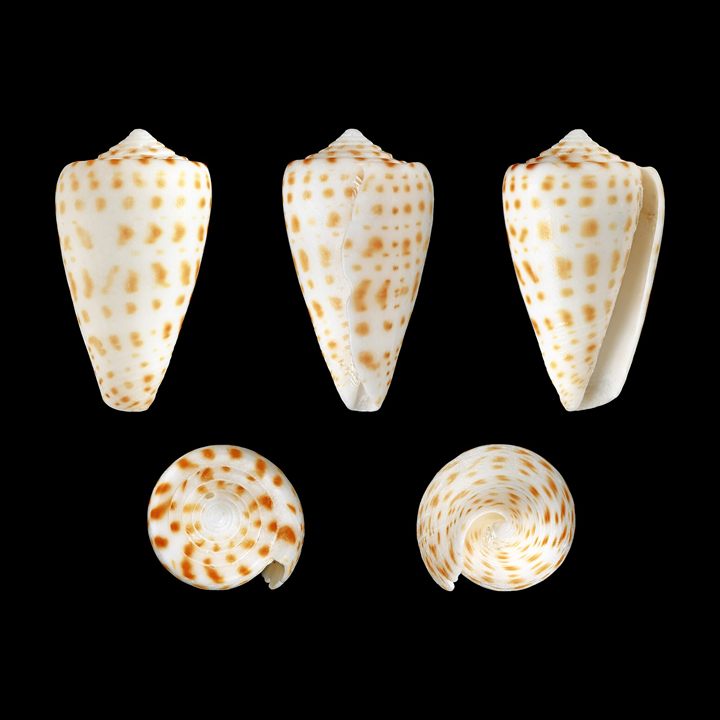
Photo: H. Zell, CC BY-SA 3.0, via Wikimedia Commons
Alphabet Cone
- Typical size
- 2.0 – 3.0 in (5 – 8 cm)
- Group
- Gastropod (sea snail)
- Rarity
- Prized Find
- Habitat
- Shallow sandy bottoms and seagrass beds in Florida and the Caribbean
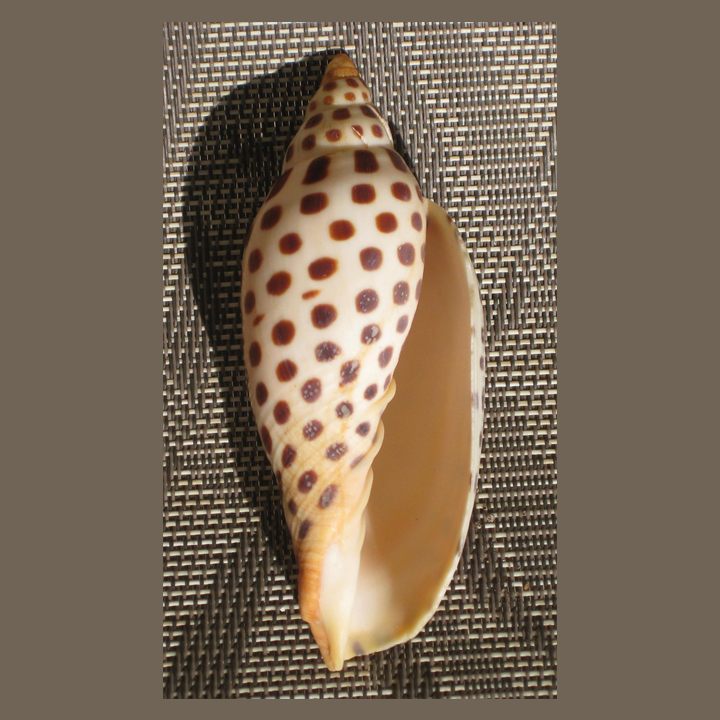
An elegant flat-topped cone shell: white with spiral rows of orange-yellow spots and blotches that look like scattered letters of the alphabet.
Quick answer · Quick Identification Verdict
Flat, almost level spire top with sharp shoulder angles tapering down to a narrow base.
Alphabet Cone key facts
| Scientific name | Conus spurius |
|---|---|
| Typical size | 2.0 – 3.0 in (5 – 8 cm) |
| Rarity | Prized Find |
| Where it lives | Shallow sandy bottoms and seagrass beds in Florida and the Caribbean |
| Best chance to find one | Low tides around Sanibel's Blind Pass and Marco Island's sandbar spits. |
| OK to collect? | Only if it is empty. If an animal is inside, return it to the water. Live shelling is banned in Lee County, Florida (Sanibel, Captiva, Fort Myers Beach). |
How to identify a Alphabet Cone: Diagnostic Field Checklist
Confirm your find against these primary diagnostic characteristics:
- Inverted cone shape with flat, terraced spire and sharp shoulder
- Orange, chestnut, or golden markings resembling letters and glyphs
- Narrow, straight aperture running the entire length of the cone
Where and when to find it
Low tides around Sanibel's Blind Pass and Marco Island's sandbar spits.
Shelling ethics: only collect empty shells. If an animal is inside, return it to the water. Live shelling is banned in Lee County, Florida (Sanibel, Captiva, Fort Myers Beach).
Alphabet Cone: common questions
How do I identify a Alphabet Cone?
Flat, almost level spire top with sharp shoulder angles tapering down to a narrow base.
Where and when are you most likely to find a Alphabet Cone?
Low tides around Sanibel's Blind Pass and Marco Island's sandbar spits.
Can I collect a Alphabet Cone in Florida?
Only if it is empty. If an animal is inside, return it to the water. Live shelling is banned in Lee County, Florida (Sanibel, Captiva, Fort Myers Beach).