Photo: James St. John, CC BY 2.0, via Wikimedia Commons
Sunray Venus
- Typical size
- 3.0 – 5.0 in (7.5 – 13 cm)
- Group
- Bivalve (two-part shell)
- Rarity
- Prized Find
- Habitat
- Sandy bottoms in shallow water from North Carolina to the Gulf of Mexico
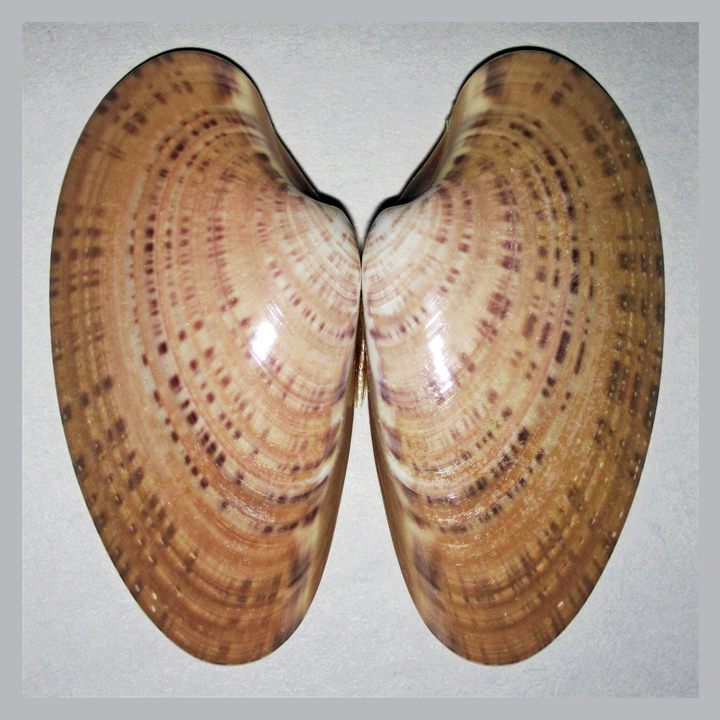
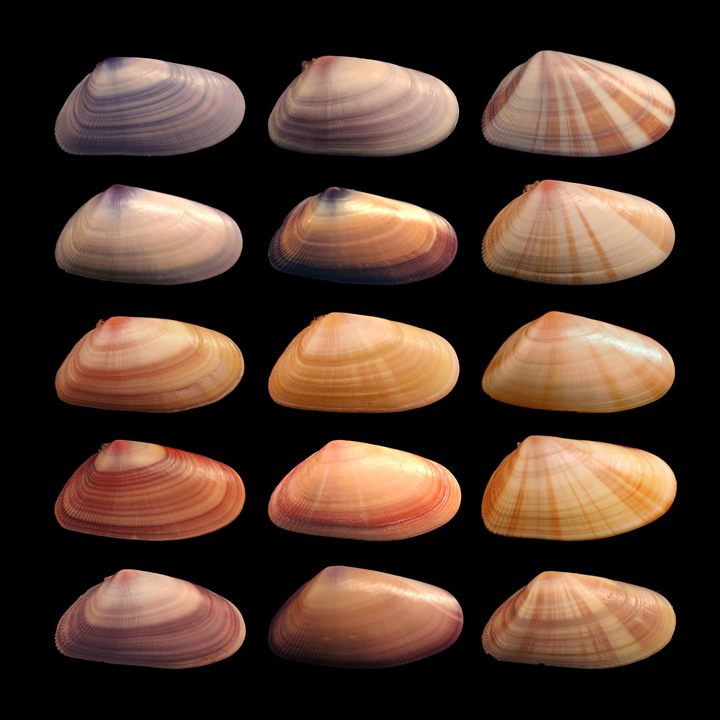
A long, glossy, oval clam with soft lilac, pink and tan rays spreading from the hinge like a sunrise. Paired, unbroken specimens are a favorite Sanibel find.
Quick answer · Quick Identification Verdict
Look for an elongated, smooth, very glossy oval valve with broad lavender-pink or brown rays crossing fainter bands. It is much larger and longer than a coquina and smooth rather than ribbed.
Sunray Venus key facts
| Scientific name | Macrocallista nimbosa |
|---|---|
| Typical size | 3.0 – 5.0 in (7.5 – 13 cm) |
| Rarity | Prized Find |
| Where it lives | Sandy bottoms in shallow water from North Carolina to the Gulf of Mexico |
| Best chance to find one | Washes up on southwest Florida beaches after strong winds and storms; check sandbars at low tide. |
| OK to collect? | Only if it is empty. If an animal is inside, return it to the water. Live shelling is banned in Lee County, Florida (Sanibel, Captiva, Fort Myers Beach). |
How to identify a Sunray Venus: Diagnostic Field Checklist
Confirm your find against these primary diagnostic characteristics:
- Long, smooth, very glossy oval valve (3 – 5 inches)
- Lilac, pink or brown rays spreading from the hinge
- No ribs or spines
Commonly confused with
The Sunray Venus is often mistaken for the Coquina Clam. Compare them side by side in the Lookalikes Lab.
Where and when to find it
Washes up on southwest Florida beaches after strong winds and storms; check sandbars at low tide.
Shelling ethics: only collect empty shells. If an animal is inside, return it to the water. Live shelling is banned in Lee County, Florida (Sanibel, Captiva, Fort Myers Beach).
Sunray Venus: common questions
How do I identify a Sunray Venus?
Look for an elongated, smooth, very glossy oval valve with broad lavender-pink or brown rays crossing fainter bands. It is much larger and longer than a coquina and smooth rather than ribbed.
Where and when are you most likely to find a Sunray Venus?
Washes up on southwest Florida beaches after strong winds and storms; check sandbars at low tide.
What is the Sunray Venus most often confused with?
The Coquina Clam. Compare both guides side by side before deciding.
Can I collect a Sunray Venus in Florida?
Only if it is empty. If an animal is inside, return it to the water. Live shelling is banned in Lee County, Florida (Sanibel, Captiva, Fort Myers Beach).