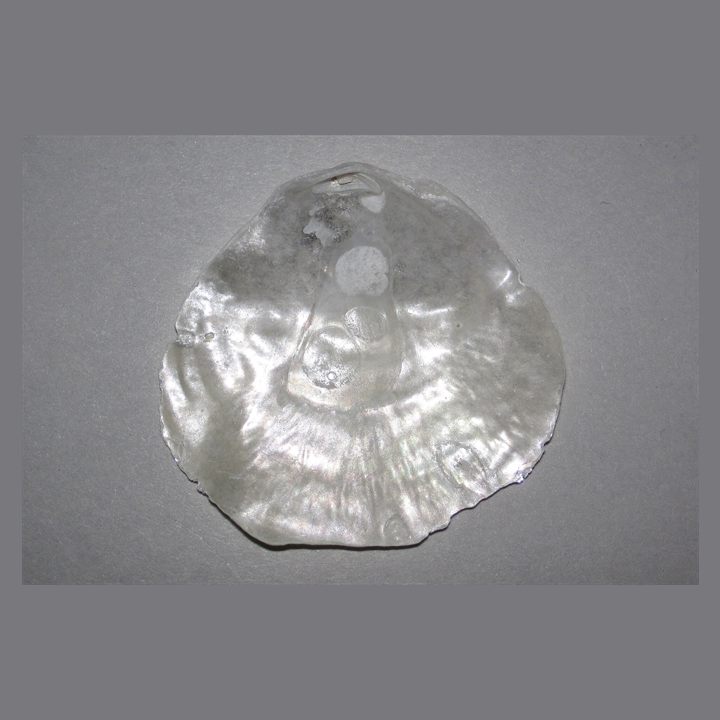
Photo: James St. John, CC BY 2.0, via Wikimedia Commons
Common Jingle Shell
- Typical size
- 1.0 – 2.0 in (2.5 – 5 cm)
- Group
- Bivalve (two-part shell)
- Rarity
- Common Find
- Habitat
- Attached to rocks, pilings, shells and boats from Nova Scotia to the Gulf of Mexico
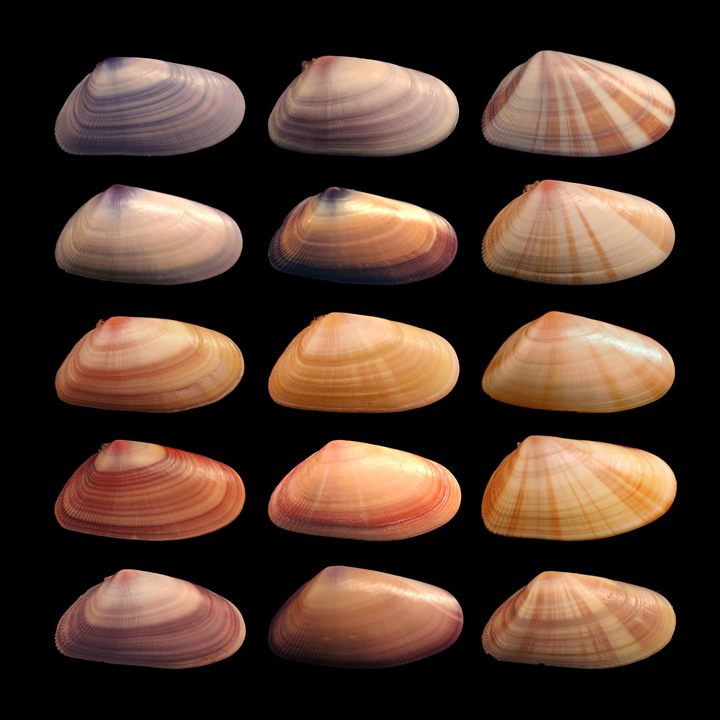
Thin, shiny, almost see-through shells in gold, orange, silver, black or white. The lower valve has a hole where the animal attached itself, and strung together they jingle, hence the name.
Quick answer · Quick Identification Verdict
Look for a thin, glossy, irregular oval valve with a pearly sheen. The flat lower valve has a hole near the hinge; the domed upper valve doesn't. Black ones were stained by buried sediment.
Common Jingle Shell key facts
| Scientific name | Anomia simplex |
|---|---|
| Typical size | 1.0 – 2.0 in (2.5 – 5 cm) |
| Rarity | Common Find |
| Where it lives | Attached to rocks, pilings, shells and boats from Nova Scotia to the Gulf of Mexico |
| Best chance to find one | Very common in the wrack line on nearly every Atlantic and Gulf beach. |
| OK to collect? | Only if it is empty. If an animal is inside, return it to the water. Live shelling is banned in Lee County, Florida (Sanibel, Captiva, Fort Myers Beach). |
How to identify a Common Jingle Shell: Diagnostic Field Checklist
Confirm your find against these primary diagnostic characteristics:
- Thin, glossy, translucent, irregular oval valve
- Pearly sheen in gold, orange, silver, black or white
- Lower valve has a hole near the hinge
Where and when to find it
Very common in the wrack line on nearly every Atlantic and Gulf beach.
Shelling ethics: only collect empty shells. If an animal is inside, return it to the water. Live shelling is banned in Lee County, Florida (Sanibel, Captiva, Fort Myers Beach).
Common Jingle Shell: common questions
How do I identify a Common Jingle Shell?
Look for a thin, glossy, irregular oval valve with a pearly sheen. The flat lower valve has a hole near the hinge; the domed upper valve doesn't. Black ones were stained by buried sediment.
Where and when are you most likely to find a Common Jingle Shell?
Very common in the wrack line on nearly every Atlantic and Gulf beach.
Can I collect a Common Jingle Shell in Florida?
Only if it is empty. If an animal is inside, return it to the water. Live shelling is banned in Lee County, Florida (Sanibel, Captiva, Fort Myers Beach).